|
|
College Holds Cooperation Meeting on Training Initiatives with the School of Continuing Education On the afternoon of March 18, 2026, the School of Continuing Education and the College of Economics at Jiangxi University of Finance and Economics held a special meeting in Conference Room 806 of the Comprehensive Building in the North Zone of Jiaoqiao Campus to engage in in-depth discussions on deepening internal collaboration and jointly expanding training programs. Attendees included Ning Liang, Dean of the School of Continuing Education; Lan Fang, Associate Dean; and Xie Yuanyuan, Director; as well as Wang Shoukun, Administrative Director of the School of Economics; and Associate Deans Li Guomin, Yu Bingwen, and Zeng Yongming.
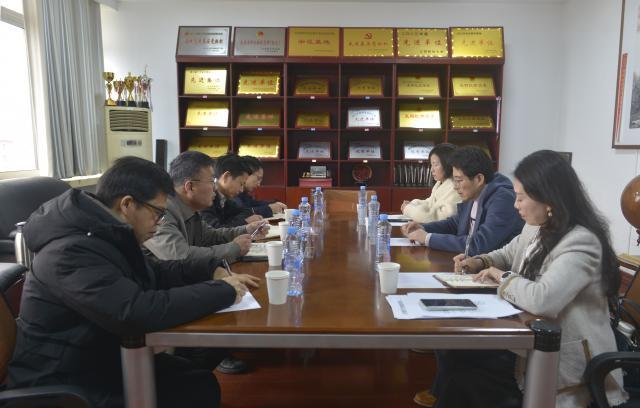
The core objective of this meeting was to integrate the strengths of both units and explore new avenues for training services. The School of Continuing Education detailed its established business operations in areas such as education for individuals with equivalent academic qualifications, corporate training, continuing education for technical professionals, and university-enterprise collaborative training. It also proposed a collaborative vision: to jointly develop new business segments with the School of Economics, such as agricultural economics training and economic management training for Party and government agencies, leveraging the disciplinary and platform strengths of both units to achieve complementary resources and synergistic benefits.
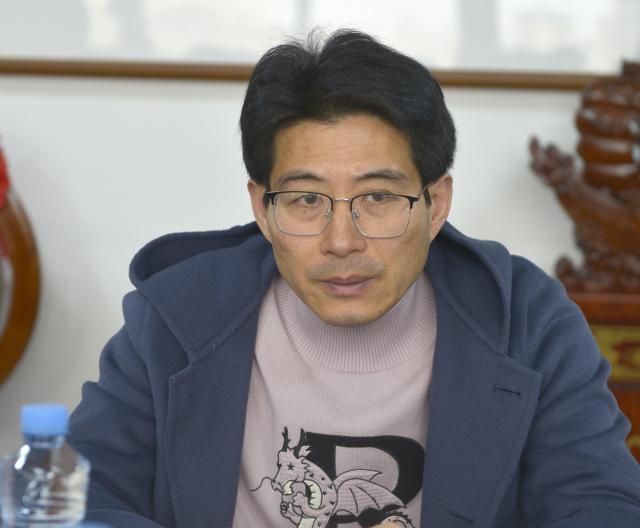
Dean Ning Liang noted that future efforts should leverage the School of Economics’ disciplinary strengths and faculty resources to align with the School of Continuing Education’s integrated business framework of “front-end market development, mid-end product design, and back-end delivery and operations,” thereby achieving synergistic development. In the field of training for Party and government agencies, it is necessary to utilize the School of Economics’ channel resources to promote the joint development of training programs with the Provincial Party Committee Organization Department and explore new avenues for cooperation. Vice Dean Lan Fang added that the training will adopt a three-phase model consisting of “initial classroom training + mid-term training at practical bases + post-training mentorship.” Through field visits and other forms of on-site inspection, the initiative aims to establish a practical mechanism integrating industry, research, and education. Director Xie Yuanyuan highlighted the “Training Program for High-Quality Rural Collective Economy Leaders,” which has been included on the “whitelist” of the Jiangxi Provincial Department of Agriculture and Rural Affairs. The project is planned to be implemented in three phases and requires the School of Economics to recommend faculty members from relevant fields to participate in teaching.
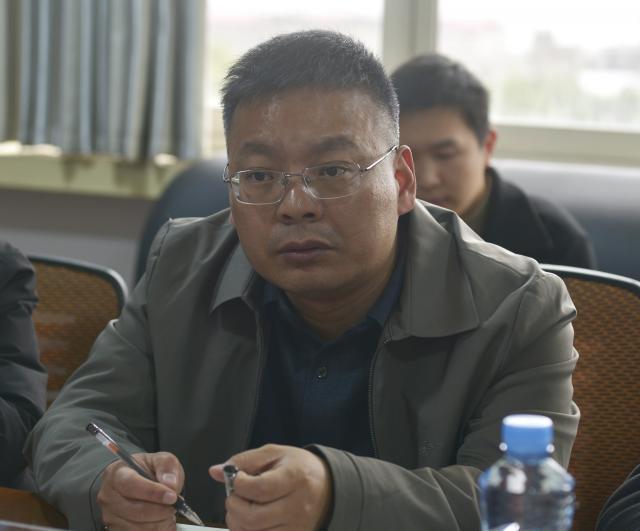
Wang Shoukun stated that faculty members from the Department of Resources and Environment and other relevant departments within the School of Economics could actively participate in the aforementioned projects. He suggested that both parties jointly establish a systematic training framework to achieve resource sharing and complementary strengths. Vice Deans Li Guomin and Zeng Yongming proposed two innovative directions for cooperation: first, to incorporate the “ESG Reporting Training Program” already launched by the Jiangxi Daily to explore a tripartite collaboration model involving the School of Continuing Education, the School of Economics, and the Jiangxi Daily; second, to collaborate with Russian universities to advance “1+1” or “2+0” master’s degree programs in digital economy, with further discussions required on degree conferral standards, fee structures, and enrollment plans. Vice Dean Yu Bingwen suggested collaborating with the Asset Valuation Association to launch entry-level, intermediate, and advanced “Asset Valuation Training Courses,” focusing on cutting-edge fields such as the inclusion and management of data assets on balance sheets, to build a specialized training brand. This meeting further clarified the direction and implementation pathways for bilateral cooperation, laying a solid foundation for the subsequent implementation of training programs, resource sharing, and joint brand development.
School websit link:https://econ.jxufe.edu.cn/news-show-6928.html Translated by Ying Liu
|
|